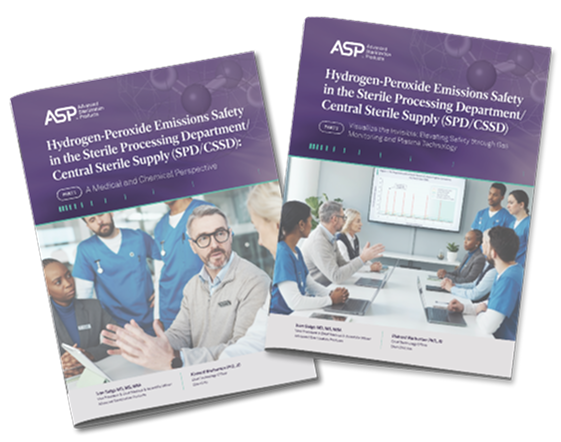
This white paper gives Sterile Processing and Infection Prevention leaders clear, practical guidance to better understand and manage hydrogen peroxide exposure risks.

Inside, you’ll discover:

  • Why outdated hydrogen peroxide (H₂O₂) exposure limits may not adequately protect staff
  • What happens when sterilizer doors open — short-term spikes up to 40 ppm
  • How odorless hydrogen peroxide can create hidden risks
  • Why global STEL regulations are shifting — and what they mean for your organization
  • How VH₂O₂ + plasma technology helps reduce exposure during sterilizer door opening
     
Female healthcare worker wearing a gown, cap, gloves, and mask


Updated safety guidance, including AAMI ST58:2024, places increasing emphasis on protecting staff from harmful emissions.

Hospitals that proactively monitor and manage hydrogen peroxide exposure can better protect their teams, support compliance, and stay prepared for evolving guidance.

Authors

Dr. Ivan S. Salgo

Ivan S. Salgo M.D., M.S., M.B.A.

Vice President, Chief Medical and Scientific Officer, ASP

Richard Warburton

Richard Warburton Ph.D., J.D.

CTO and General Counsel, ChemDAQ Incorporated

References

  1. (ATSDR), T. A. for T. S. and D. R. (2014). Medical Management Guidelines for Hydrogen Peroxide.pdf. https://www.webpoisoncontrol.org/-/media/files/ pdf-for-article-dowloads-and-refs/medical-management-guidelines-for- hydrogen-peroxide.pdf

AP-2501370-1