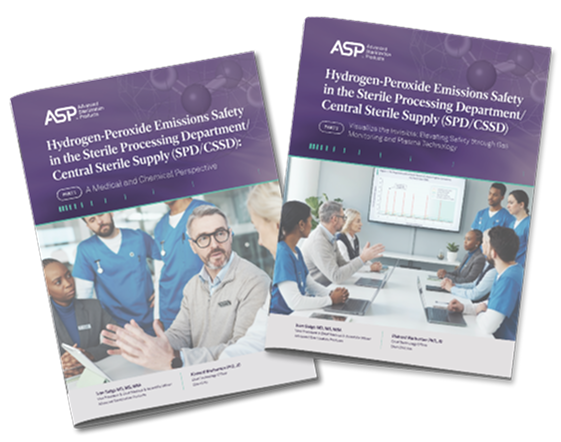
Hydrogen peroxide has long been trusted for its sterilization power, but new findings show that short-term exposure risks may be under-recognized.

These white papers provide a scientific, practical review of exposure risk and emissions management to help sterile processing and infection prevention leaders create a safer, more consistent approach to hydrogen peroxide vapor safety for their teams.
Part 1: Understanding hydrogen peroxide exposure risk

Inside you’ll learn:

  • Why outdated hydrogen peroxide (H₂O₂) exposure limits may not protect staff
  • What happens when sterilizer doors open: spikes up to 40 ppm
  • How odorless hydrogen peroxide can create hidden risks
  • Why global STEL regulations are shifting and what that means for you
  • How vH₂O₂ + plasma technology reduces exposure at door opening

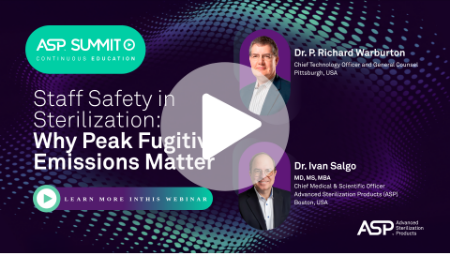
On demand webinar:

Staff Safety in Sterilization: Why Peak Fugitive Emissions Matter

Join Dr. Ivan Salgo and Dr. Richard Warburton as they discuss key findings on hydrogen peroxide exposure risks and emissions management - and what they mean for sterile processing teams to improve operational safety.

​

Why this matters now?

  • Safety standards are evolving to address short-term exposure risk
  • Monitoring and control strategies are becoming more important where exposure may occur
  • Hospitals that proactively evaluate and manage emissions can better support staff safety and readiness
Last Updated Date:   11/05/2026

Disclaimer

The content of this website is aimed exclusively at healthcare professionals (HCPs) and not at the general public. Please confirm by clicking below that you are a healthcare professional, duly authorized to practice in your field. ASP EMEA declines all responsibility in case of unauthorized consultation.