Overview
Effective Medical Device Reprocessing Starts with Manual Cleaning
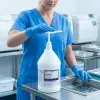
Manual cleaning is the most critical step in medical device reprocessing, directly impacting the effectiveness of all subsequent steps and ultimately patient safety. Leading medical device manufacturers increasingly emphasize the importance of this step as the foundation for successful disinfection and sterilization. Yet, what matters most is often not visible. Even when an endoscope appears clean, residues - especially within complex internal channels - may remain.
The most challenging form of contamination is biofilm: a structured layer of microorganisms protected by a strong extracellular matrix, making them up to 1,500 times more resistant to removal than other types of soil and impossible to detect visually. Contrary to common perception, if manual cleaning is not properly performed, subsequent high-level disinfection or sterilization cannot may not be effective.
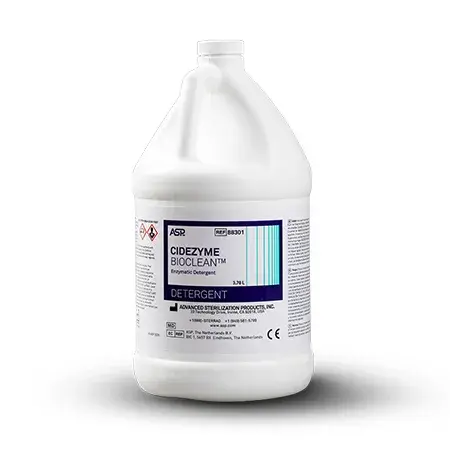
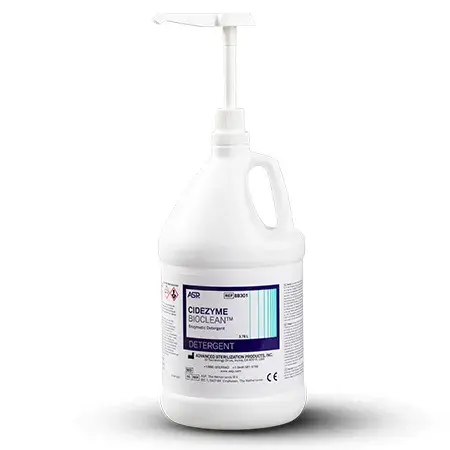
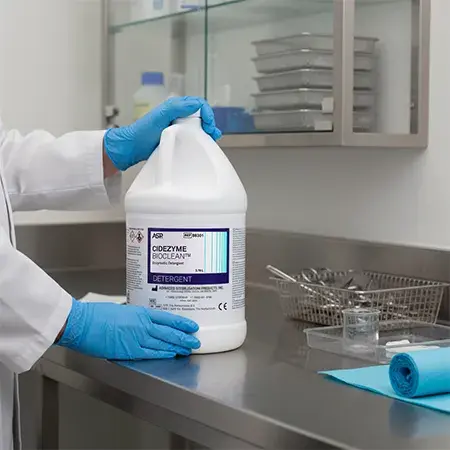
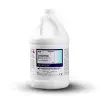
CIDEZYME BIOCLEAN™ is an advanced enzymatic detergent specifically developed to address biofilm removal. When used as per IFU, it enables physical removal of biofilm during manual cleaning and improves the margin of safety before high-level disinfection or sterilization.
What Makes CIDEZYME BIOCLEAN™ Different:
ISO-Aligned Biofilm Removal

Addresses one of the most critical and underestimated risks in endoscope reprocessing.
- Aligned with ISO 15883-5 cleaning acceptance criteria
- Demonstrates effective biofilm disruption and removal, not just surface cleaning
Defined & Reproducible Cleaning Process
Moves cleaning from assumption to clearly controlled and repeatable practice.
- Based on defined parameters: time, temperature, and mechanical action (flow)
- Enables standardization across users and facilities, reducing variability
Efficient & Practical Use Conditions
Designed to integrate easily into daily workflows without adding complexity.
- Contact time: 3 min soak + 5 min flush
- Highly concentrated formula: effective at 8 mL/L @ 30°C
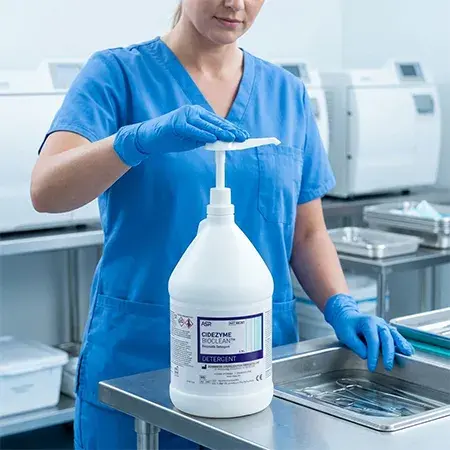
- To be used with a flushing aid device ensuring a minimum flow of 1000 mL/min through channels
Advanced Formulation Performance
Cleaning efficacy driven by a formulation designed for real-world challenges.
- Unique formulation supporting biofilm disruption
- Low-foaming for optimal usability and residue removal
Safe, Compatible & Sustainable
Balances performance with material compatibility and environmental considerations.
- Superior material compatibility compared with leading detergent
- Readily biodegradable formulation as per OECD310 standard
Order Code
| Product Name | Product Number | Packaging |
|---|---|---|
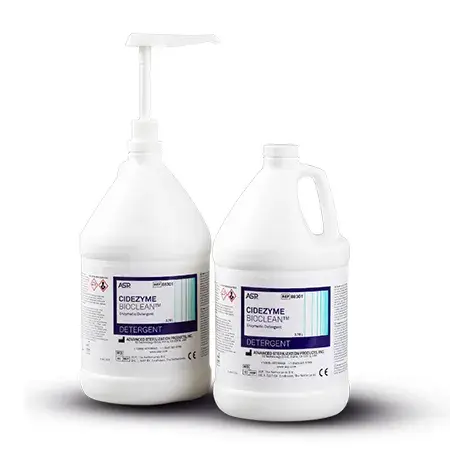
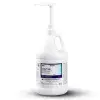
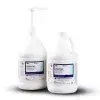
| CIDEZYME BIOCLEAN™ | 88301 | 1 Gallon bottle (3.78 L); Case: 4 × 1 gallon + 1 pump |
FAQ
Why is biofilm found in endoscopes, and why is it a concern during reprocessing?
Biofilm develops in endoscopes due to their complex design and long, narrow channels that are difficult to fully clean and disinfect. Inadequate reprocessing can leave behind residual organic soil and moisture, allowing microorganisms to accumulate and form biofilm over repeated use cycles. Biofilm is a critical concern because its protective structure significantly increases microbial resistance to high-level disinfection (HLD), raising the risk of patient-to-patient transmission.
What is the mechanism of action of CIDEZYME BIOCLEAN™?
Microorganisms within mature biofilms are embedded in extracellular polymeric substances (EPS), a protective matrix composed of polysaccharides, proteins, lipids, and extracellular DNA/RNA. CIDEZYME BIOCLEAN™ combines a specifically formulated enzyme with surfactants to disrupt and break down this EPS structure. Under defined conditions (minimum flow rate of 1000 mL/min, 30°C, 5 minutes contact time), this combined chemical and mechanical action enables effective removal of biofilm meeting the ISO 15883-5:2021 acceptance criteria.
Does the mild pH of CIDEZYME BIOCLEAN™ raise any concerns about material compatibility?
No. Mild pH detergents are generally safe for use on endoscopes and medical instruments. CIDEZYME BIOCLEAN™ has demonstrated excellent material compatibility and corrosion inhibition, including performance superior to some neutral pH competitor detergents. Available data confirm that it is safe for use on endoscopes.
Can CIDEZYME BIOCLEAN™ be used with an existing flushing aid device, or is a new device required?
CIDEZYME BIOCLEAN™ can be used with an existing flushing aid device, provided the device delivers a minimum flow rate of 1000 mL/min and does not require authentication for a specific detergent.
How does CIDEZYME BIOCLEAN™ achieve better cleaning performance compared to multi-enzymatic detergents?
CIDEZYME BIOCLEAN™ is a uniquely formulated detergent for physical removal of biofilms. Its performance is driven by the synergy of chemical and mechanical action, rather than the number of enzymes alone. This enables superior cleaning performance compared to other enzymatic detergents tested by ASP.
Why does CIDEZYME BIOCLEAN™ have two contact times, while detergents by other manufacturers typically have only one soak time?
CIDEZYME BIOCLEAN™ includes a 3-minute soak step to remove organic soil from external surfaces, similar to standard detergents. An additional 5-minute flushing step under defined conditions (8 mL/L, ~30°C, minimum 1000 mL/min flow) is used to target biofilm removal within endoscope channels. This second step is necessary for biofilm removal.
Can CIDEZYME BIOCLEAN™ be used by customers who do not have a flushing aid device?
Yes. CIDEZYME BIOCLEAN™ can be used for standard manual cleaning of flexible endoscopes and medical instruments according to the IFU. In the absence of a flushing aid device, a 3-minute soak step provides effective cleaning of organic soils. Enhanced biofilm removal requires the additional flushing step under defined conditions in the IFU.
Literature
Related Products