The Hidden Challenge of Biofilm in Endoscope Reprocessing

Visual inspection is commonly used as a quick assessment following manual cleaning. If no visible soil remains, the device may be considered ready for the next reprocessing step, such as automated washing, high level disinfection or automated endoscope reprocessing. However, visible cleanliness does not confirm the absence of residual contamination within complex device structures.1

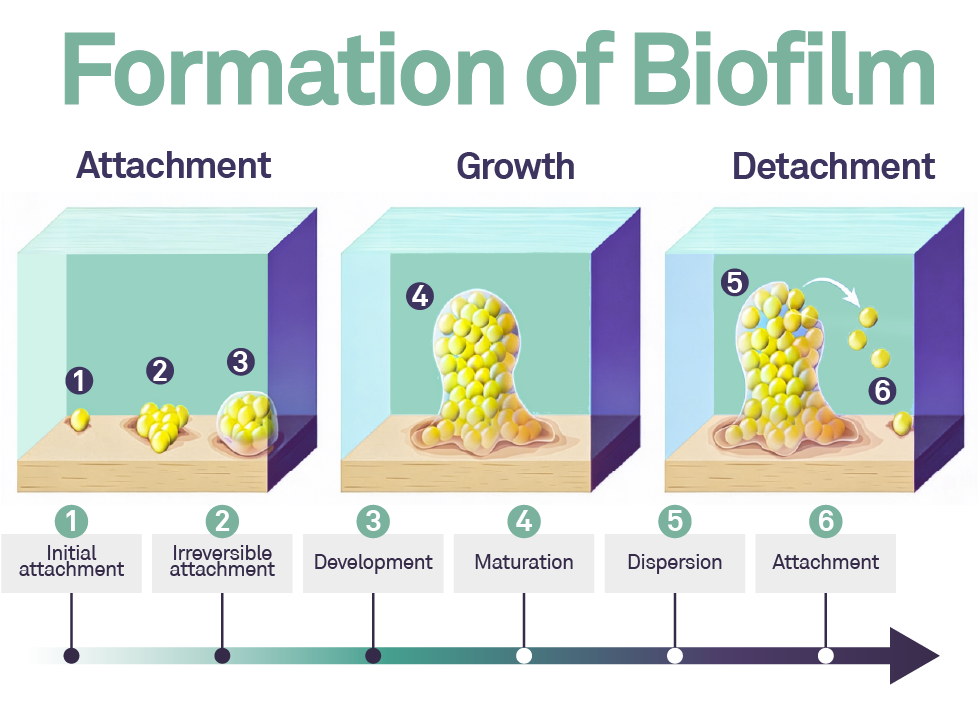
Increasingly, healthcare professionals recognize that biofilm - structured communities of microorganisms embedded in a protective matrix - may persist on medical devices even when no visible contamination is observed. Understanding this hidden challenge is an important step toward improving cleaning effectiveness.2

Limitations of visual inspection1

  • Confirms absence of visible soil or debris
  • Does not confirm absence of residual microorganisms
  • Does not confirm absence of biofilm
  • Does not reflect cleaning effectiveness within internal channels

Image
biofilm

Biofilm is a structured community of microorganisms attached to a surface and embedded in a protective matrix. This structure can make contamination more difficult to remove from medical devices.

Image
AP-260~2

The biofilm matrix:

  • anchors microorganisms to surfaces
  • protects microorganisms from environmental stress
  • may increase resistance to removal compared with planktonic (free-floating) microorganisms

In endoscopes, biofilm can form:

  • inside narrow channels (lumens)
  • on internal surfaces with repeated exposure to moisture and organic material
  • in areas where mechanical access is limited
Image
AP-260~3

Flexible endoscopes present unique reprocessing challenges due to their complex design, narrow channels, and limited accessibility of internal surfaces, which may contribute to biofilm formation and persistence.4

Not all contamination is the same
TypeWhat it isKey characteristics
Visible soilBlood, tissue, or other organic residues visible on the device5Visually detectable following use
BioburdenViable microorganisms present on a device prior to cleaning, disinfection, or sterilization5Includes both free and surface-associated microorganisms
BiofilmSurface-attached microorganisms within a protective matrix2Protected by a matrix → more difficult to remove once established

Biofilm behaves differently and requires a tailored cleaning approach.2

Image
colonoscope

Borescope inspection can help identify residual contamination and cleaning challenges within internal endoscope channels.

Image
Biofilm on a colonoscope
Image
APC2D7~1

Effective cleaning goes beyond visible cleanliness8

What this means for your cleaning process

To effectively address biofilm, cleaning should:

  • Include defined parameters such as contact time, temperature, and flow rate7
  • Support mechanical action within internal channels, not only external device surfaces
  • Be designed to remove both visible and non-visible contamination7
  • Follow a standardized process intended to support reproducible cleaning outcomes and minimize user-dependent variation8

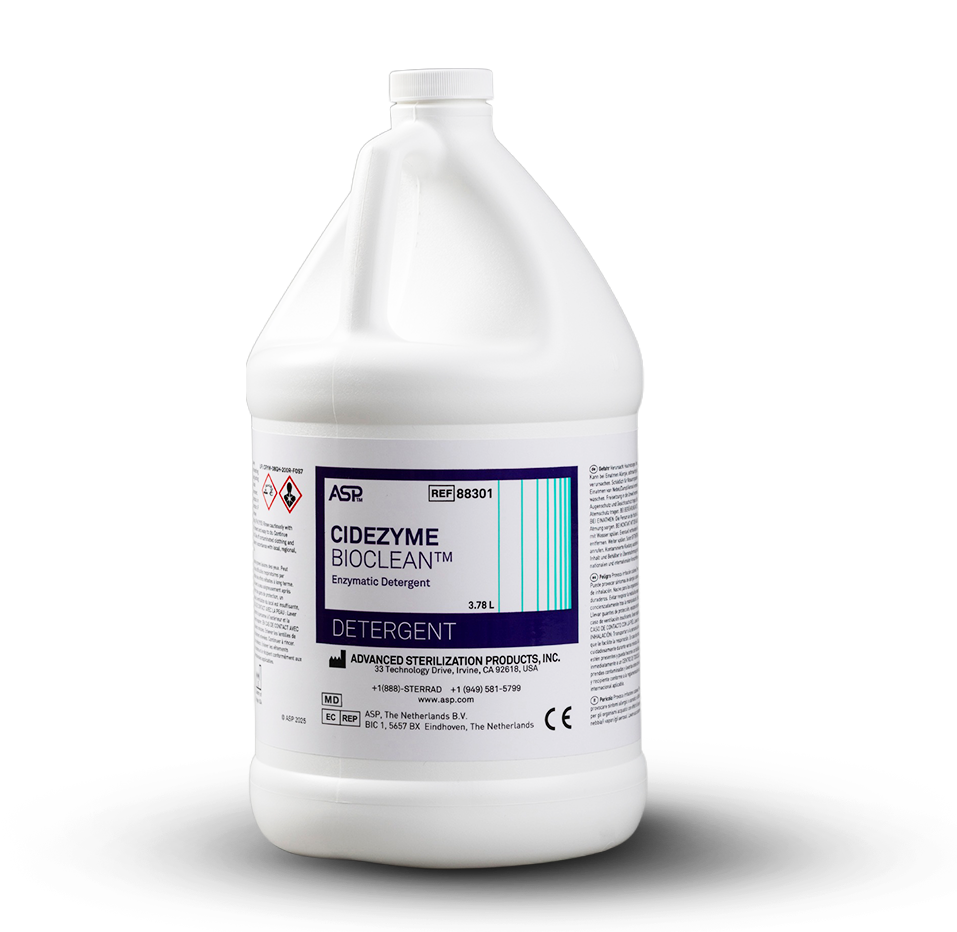
CIDEZYME BIOCLEAN™ Enzymatic Detergent can support these requirements.9

Image
NO-BG-PRODUCT1

For more information, please visit asp.com or contact your ASP Sales Representative.

References

  1. Ofstead CL, Wetzler HP, Eiland JE, Heymann OL, Held SB, Shaw MJ. Assessing residual contamination and damage inside flexible endoscopes over time. American Journal of Infection Control. 2017;45(11):1209–1215.

  2. Donlan RM. Biofilms and device-associated infections. Emerging Infectious Diseases. 2001;7(2):277–281.

  3. Primo MG, Costa DM, Guadagnin SV, Azevedo AS, Alfa MJ, Vickery K, Leão-Vasconcelos LSN, Tipple AF. Biofilm accumulation in new flexible gastrointestinal endoscope channels in clinical use. Open Forum Infectious Diseases. 2020;7(Suppl 1):S578.

  4. Luo Y, Yang Q, Li B, Yao Y. Establishment of a quality control circle to reduce biofilm formation in flexible endoscopes by improvement of qualified cleaning rate. Journal of International Medical Research. 2020;48(9):1–14.

  5. Centers for Disease Control and Prevention (CDC). Bioburden on Medical Devices. CDC Infection Prevention and Control Resources.

  6. Ofstead CL. Residual contamination: Soil, bioburden, and biofilm. Educational video resource.

  7. Galvan K. Cleaning, Disinfection and Sterilization.

  8. Azizi J, Gavette M, Kulkarni K, Drosnock MA. Efficacy of cleaning. Biomedical Instrumentation & Technology. 2020.

  9. CIDEZYME BIOCLEAN™ Enzymatic Detergent Instructions for Use.

Disclaimer

The content of this website is aimed exclusively at healthcare professionals (HCPs) and not at the general public. Please confirm by clicking below that you are a healthcare professional, duly authorized to practice in your field. ASP EMEA declines all responsibility in case of unauthorized consultation.