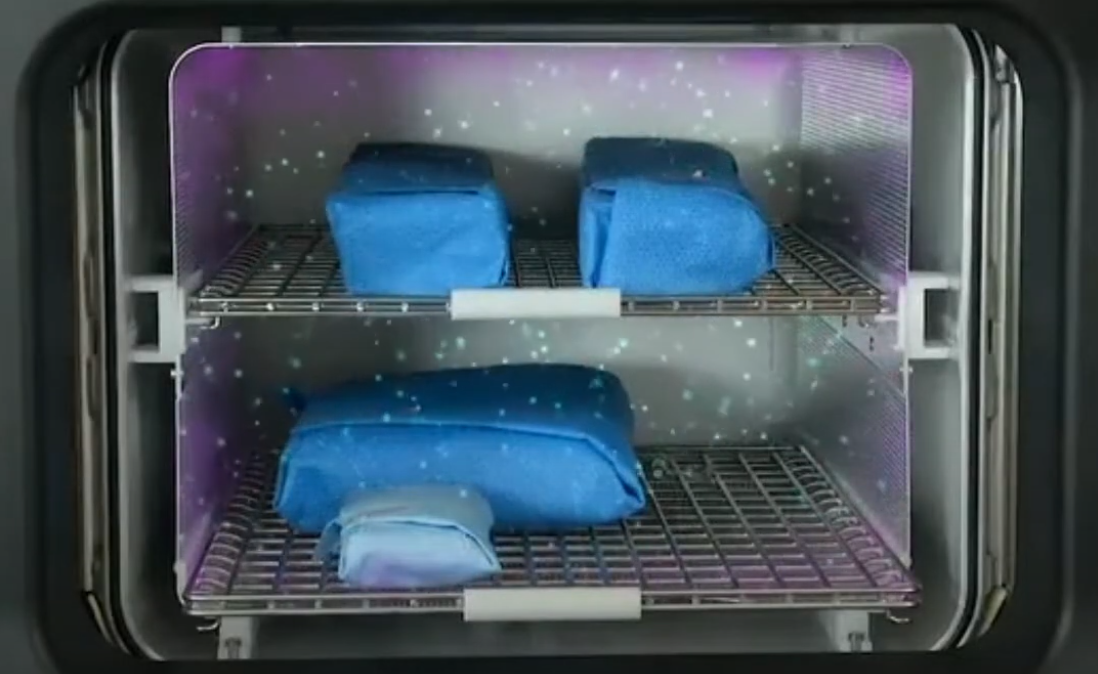
At Clinica Humanitas Cellini in Turin, a routine check turned into a critical reminder of why biological indicators (BIs) are essential for ensuring sterilization safety—even when all other indicators suggest otherwise.

The Challenge
A second BI test, again using a 20-minute BI in a new cycle, was also positive.
The facility was using a competitor’s steam sterilizer when they experienced:
- A failed vacuum test
- Two failed instrument cycles
A technician was called in and replaced minor components. The system was then re-tested using the vacuum and Bowie-Dick tests (from the same manufacturer), and both appeared to pass successfully.
However, the very next day, the issues returned:
- The heating phase
- The Bowie-Dick test
- And the vacuum test
All showed negative results, so the team proceeded with an instrument cycle, placing a 20-minute biological indicator (BI) inside.
The result: positive.
A second BI test, again using a 20-minute BI in a new cycle, was also positive.

The Turning Point
Only the biological indicators caught the failure.
At this point, the team contacted their local ASP representative, who:
- Replaced the current 20-minute BI batch to exclude batch-related anomalies
- Provided a 60-minute BI for further verification
The result? Still positive.
To be safe, the team tested their other two sterilizers, which showed no anomalies—confirming the issue was specific to one machine.
The original equipment manufacturer was contacted. The sterilizer remained out of service for two full days, during which major internal components were replaced.
Even more concerning:
All other indicators—including Type 1 process indicators, Type 5 integrating indicators, and chemical indicators—had shown false-negative results throughout.
Only the biological indicators caught the failure.

What Went Wrong? Why the Other Indicators Missed It?
The issue was likely linked to incomplete steam penetration or inconsistent temperature distribution due to a mechanical fault.
Chemical indicators (Type 1 and Type 5) respond to specific physical parameters like temperature and time—but they don’t confirm microbial inactivation.
In contrast, biological indicators use resistant spores to simulate the worst-case sterilization scenario—making them the only test that directly measures the effectiveness of microbial kill.

Why It Matters: Understanding the Standards
BIs are considered best practice for routine quality assurance
According to ISO 17665-1:2006
(Sterilization of health care products – Moist heat – Part 1: Requirements for the development, validation and routine control of a sterilization process for medical devices), proper monitoring of steam sterilization must include:
- Physical monitoring: time, temperature, pressure (required for every cycle)
- Chemical indicators: Type 1 indicators required on every package
- Biological indicators: required during validation and requalification; recommended for high-risk loads (e.g., implants), after repairs, or when anomalies are detected
Although BIs are not mandatory for daily use, they are considered best practice for routine quality assurance—especially when patient safety is at stake.

The Outcome
“Choosing the right sterilization technology doesn’t just improve efficiency—it helps deliver safer, higher-quality healthcare.”
Before this incident, the team used BIs every other day, and only during extraordinary maintenance or when anomalies occurred.
Now, they’ve updated their practice:
- BIs are still used every other day,
But now also used after any maintenance activity, no matter how minor.
Thanks to the team’s vigilance—and the decision to test with a BI even when other indicators looked “normal”—a sterilization failure was caught before any instruments reached patients.
This case is a powerful example of why BIs remain the gold standard for sterility assurance—and why following the minimum isn't always enough.