
In healthcare settings, ensuring the cleanliness of medical instruments and working space is a critical step in infection prevention. However, even after thorough cleaning and disinfection, microscopic residues can remain — especially residual proteins, which are invisible to the naked eye but can pose significant risks to patient safety.
Residual protein contamination on medical devices is a significant concern that can persist despite cleaning, and developing accurate methods to detect and quantify these proteins is important for improving reprocessing validation in hospitals and sterile services departments.¹ 

Residual protein can remain on reusable medical devices after reprocessing, even when cleaning protocols are followed; hence why protein testing may be needed to ensure cleanliness beyond what visual inspection alone can guarantee.2This is why international standards set clear expectations for cleaning validation and protein testing as part of routine quality assurance.

Healthcare professionals are turning to protein detection technologies such as protein pens, which provide rapid, sensitive, and objective confirmation that medical devices surfaces are free from residual proteins. By integrating these tests into routine reprocessing workflows, hospitals can strengthen compliance, enhance patient safety, and improve overall cleaning validation outcomes.


Why is protein detection important?
While ATP tests only detect living cells, protein tests identify organic residues from living and dead cells. Protein detection gives a complete picture of cleanliness before sterilization, ensuring that what appears clean is actually clean.
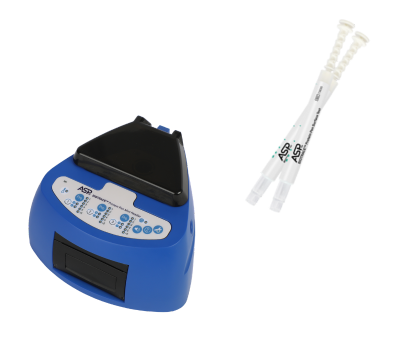
What Are Protein Pens and How Do They Work?

Protein pens are rapid testing tools designed to detect trace amounts of protein residues on cleaned instruments and surfaces. They offer an easy, standardized method for verifying cleaning efficacy.

By using a swab to collect samples from a variety of surfaces, the system triggers a color change reaction when proteins are present.

This process takes just a few minutes and delivers objective evidence that instruments are free from protein contamination before sterilization.

Image
Protein Pen Test System

Why is the BIOTRACE™ Protein Pen Test System Different?

While most tests provide only a qualitative or semi-quantitative result, often a simple color range that can be misinterpreted, the BIOTRACE™ Protein Pen Test System offers quantitative precision.


By combining the BIOTRACE™ Protein Pen Surface Test with the BIOTRACE™ Protein Pen Mini Reader, ASP provides a fully quantifiable system that measures exact protein levels in micrograms (µg), delivering reliable, traceable data for every test.

This advanced solution:
✔️   Detects residual proteins - with high sensitivity.
✔️   Meets ISO and HTM UK requirements for cleaning validation.
✔️   Delivers a numeric result in just 4 minutes, ensuring fast turnaround without compromising accuracy.


Understanding Residual Protein Risk
Proteins that remain on medical devices after cleaning can have several harmful consequences:
✔️   Enable microorganism persistence: Residual proteins can persist after cleaning, potentially supporting the survival of microorganisms and reducing disinfection effectiveness.
✔️    Compromise sterilization: Residues, including proteins, can interfere with sterilization, reducing its effectiveness.
✔️    Violate regulatory standards: Failure to detect and remove proteins can result in non-compliance with ISO and national healthcare requirements.
These risks make quantitative protein detection essential for confirming cleaning efficacy before sterilization.

Why Visual Inspection Alone Isn’t Enough
Visual inspection remains an important first step, but it cannot reliably detect protein residues.
Proteins are microscopic, colorless, and tend to accumulate in hard-to-clean areas.


Why Protein Testing Should Be Part of Every Cleaning Validation Program
Routine protein testing ensures your reprocessing workflows meet the highest regulatory and safety standards.
By implementing quantitative protein measurement, facilities can demonstrate compliance, improve process consistency, and protect both patients and staff.


AP-2400578-01-1

Disclaimer

The content of this website is aimed exclusively at healthcare professionals (HCPs) and not at the general public. Please confirm by clicking below that you are a healthcare professional, duly authorized to practice in your field. ASP EMEA declines all responsibility in case of unauthorized consultation.